Showing posts with label DJ Skills. Show all posts

Friday, February 8, 2013

DJ Tech (Video) : Are You Kidding Me?


This is why Good Djs are rare these days. Promoters endorse and book this clown who calls himself a DJ. His scratching skills alone tells and shows you the caliber of DJ he is. One thing for sure, he's smart. For a Dj who lacks skills, he's making a ton of money off you jerk-off promoters. Sad but true. The title DJ. Has to be earned. Not self proclaimed. Sure technology makes it easy for anyone to become a DJ. Please before you spend your money on these programs, DJ kits, etc...do your research, do your homework. Learn the basics. There's going to be a time when technology won't be as cooperative as you expect it to be. Practice your skills. Show the promoter, night club manager and club goers why you call yourself a "DJ". This video is an absolute embarrassment to DJs of all genres, worldwide. Please don't support any promoters or venues that support, promote or endorses this crap! He's a FRAUD not a DJ.

All comments, good bad or indifferent are welcome.

Tuesday, October 9, 2012

Skrillex Teaches Sir Richard Branson How to DJ


Here’s an interesting clip that popped up on YouTube yesterday. This past weekend Skrillex met up with gazillionaire tycoon Sir Richard Branson at Virgin Mobile’s FreeFest in Washington, D.C. The two apparently hit it off backstage, with Skrillex showing Branson (who, by the way, co-founded Virgin Records in 1972) how to work the ones and twos. Nobody is giving up their day jobs just yet, but it’s a special moment seeing a serial entepreneur in front of a pair of CDJs with one of the biggest DJs in the business.

Thursday, October 4, 2012

DMC 2012 - DJ IZOH (Japan) - DMC World Champion 2012


Here it is! The NEW DMC WORLD Champions winning performance! Congratulations to DJ IZOH from Japan!!

Thursday, January 26, 2012

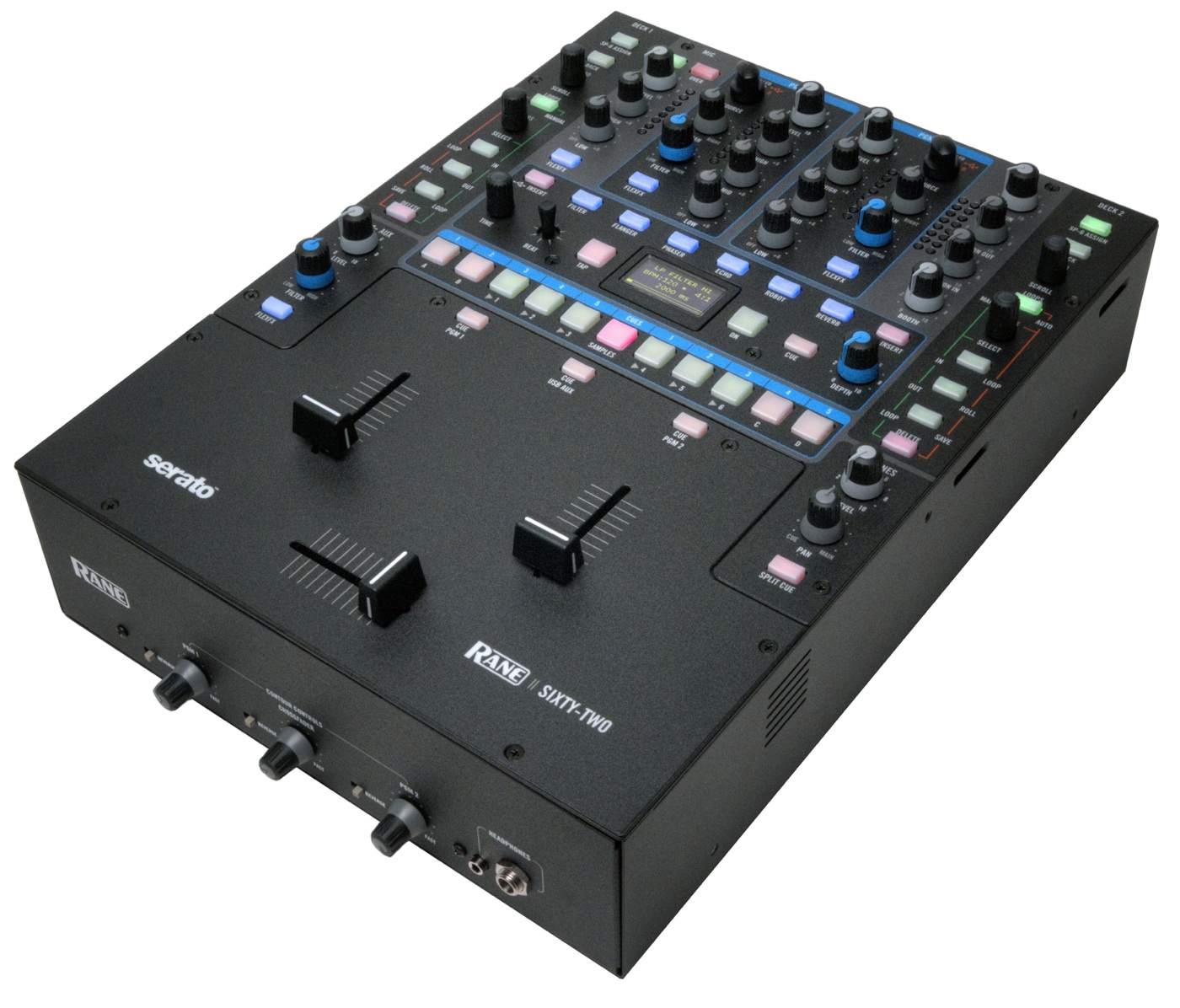
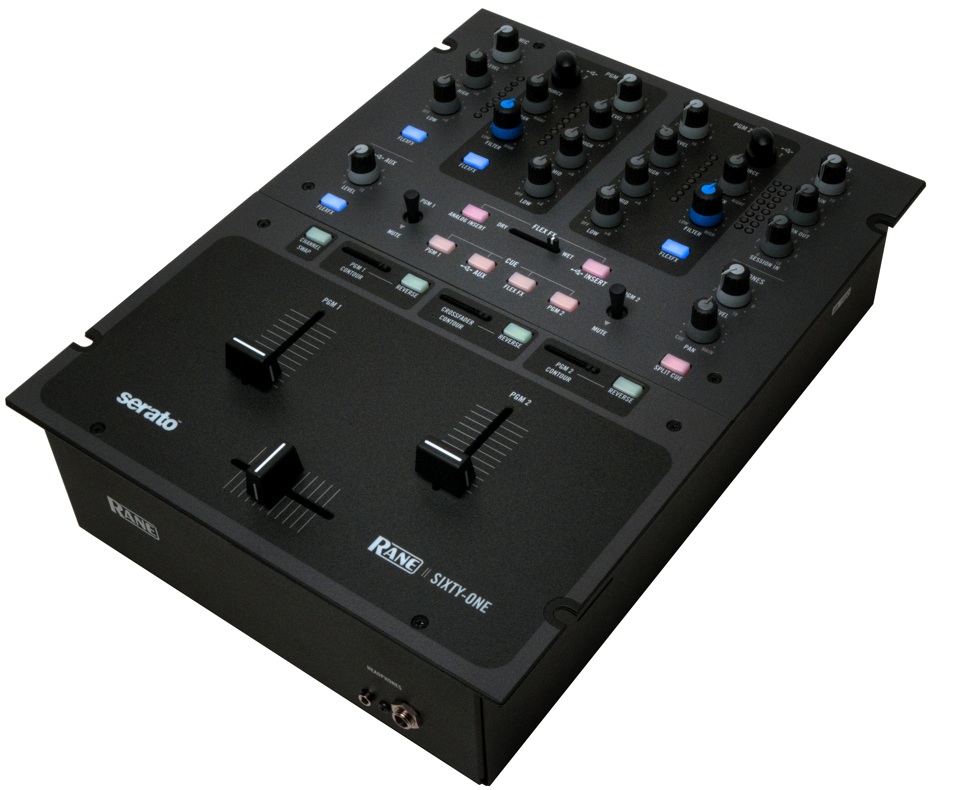
DJ Tech : Check Out The Rane Sixty-One and Sixty-Two Mixers

Rane and Serato have worked tightly together for eight years pioneering practical DVS systems. The TTM57 is definitely showing its age, though, and has now received a modern update.  There are 2 models of mixers: The Rane 61 and the Rane 62 depending on what your flavor of mixer is.

We thought actually talking to the minds behind the products would be pretty interesting – and we were right. Check out the above beautiful-looking interview shot by Zach in the most coincidentally aesthetically pleasing meeting room in the world.


Refined Design

A lot of the developments that came about through the design of the Sixty Eight have been carrried forwards in these new mixers. Perhaps two of the most exciting are 32-bit floating point audio throughout and two channels of full USB 2.0 connectivity. The faders are all Rane’s patented magnetic design, one of the many design decisions that is predicated upon the Sixty One and Sixty Two being scratch DJ orientated mixers.

The Rane Sixty-Two

The buttons on the Sixty Two are a somewhat unique design. They’re not dissimilar to the ones on the Sixty Eight, but they’re definitely different. They’re a very hard plastic, with almost no travel. Rane explained that there are two reasons for that choice: the longevity of the actual buttons is somewhere in the order of five million presses, and ergonomically there’s a strong case to be made for lining the buttons up above the channel faders in what is ostensibly a scratch mixer. For a start, leaving the fader area free is imperative to scratch DJs, and also being able to stretch fingers from the fader section up to the buttons and press them with almost no resistance is great. Of course, if you don’t like them, the Sixty One’s more spartan design may be for you.

The Rane Sixty One

Capabilities

Both mixers have a hardware filter, and feature adjustable resonance. Whilst the Sixty One more or less stops there when it comes to dazzling features, the Sixty Two has a whole host of extras. The Sixty Two’s hardware effects:
  • Filter
  • Flanger
  • Phaser
  • Echo
  • Robot
  • Reverb
One of the big developments about the effects on the Sixty Two is their simplicity. There’s a depth knob, an adjustment dial, and the ability to manually select BPM (should you not be using Scratch Live, for which the effects are all pre-synced to the internal BPM), and that’s all. Of course, the Scratch Live effects can be configured in software, and as the controls are all MIDI it’s possible to assign controls you don’t use much (perhaps mic control, for instance) to their parameters. The Scratch Live insert is available on the Sixty One too, as are external effect send/return, and they’re all stackable. All effects are totally post fader too, which is a big plus over Pioneer’s efforts; cross fader and line faders are all post.
Want to see DMC 2011 World Champion DJ Vajra tear it up on the Sixty-One? Your wish is Serato’s command.

THE BOTTOM LINE (SO FAR)

The Sixty One is the simpler of the two mixers, designed to be a less feature heavy and thus simpler version of the two; it’s more a Scratch Live enabled version of the TTM-56S than a two channel Sixty Eight. The Sixty Two on the other hand is a behemoth of potential, and if you like the design you might see yourself finding reasons to spend the extra (prices are to be confirmed, but I don’t expect either to be cheap – definitely not the Sixty Two). I’m not 100% sure where I stand between the two yet; I love the effects of the Sixty Two but at the same time I have existing tools to manipulate DJ software, so I doubt I’d use the buttons for the majority of the performance.

Z-Trip's Limited Edition Rane Sixty Two
For more information on each of the mixers, including complete tech specs, visit the extensively in-depth Rane product pages for the Sixty One or the Sixty Two. It’s also worth showing off the above version of the Sixty-Two Z-Trip’s Limited Edition Sixty-Two Z Mixer, which features:
  • Face plate design by Shepard Fairey.
  • Purple and yellow accents.
  • Includes custom purple cables


Monday, February 28, 2011

DJ Tech : Dancing – A DJ’s Secret Skill


My first exposure to “dance music culture” still feels like it was yesterday. Every Saturday night my mom would drive me to disco skate night at the local roller rink and I would skate the night away to an endless groove of disco beats. From roller skates it was only a short hop over to house music, but those early days on the rink really cemented two things in my mind. First, a deep attachment to four on the floor soul and second, a real understanding of how important it was to keep dancers moving smoothly. In today’s article, I want to talk about a DJ’s relationship to dancing and how it can really make a big difference on your dance floors.

Dance to the Rhythm


In my opinion, if you don’t enjoy dancing or at least understand what the activity feels like, it’s going to provide a handicap in the booth. However, even better than understanding the dance floor, is actually moving along with it. DJ’s that dance and move in the booth with their mix not only project confidence and get others into the tunes, but they also may be helping their mix.
Dancing along with the crowd puts you directly in touch with the fundamental feel of the rhythm and can prevent critical dance floor errors that will make everyone stop and walk away entirely. Let’s face it, when a crowd is in the groove together, you can get away with almost anything, but there is nothing harder than getting an empty floor going. Sometimes, the spark required to start that fire is you and your natural passion for the music.

Keep the Groove Rolling

While your fundamental responsibility is in picking the right music for the night, the next advanced skill for a DJ is in smoothly mixing between rhythms without breaking the flow. This goes beyond beat matching and requires an understanding of swing and feel. Two songs may match in tempo and even in key but if their fundamental rhythms are too different then the transition will totally throw the floor.
The way your body naturally moves to each of these specific songs is very different, so always be very careful when you make a transition from one style to another.  The safest place to make that switch is in a breakdown where the rhythmic elements disappear. Changing up the groove can make or break your dance floor so keep this in mind when choosing that next song!

Respect the Partner Rule


While electronic music is largely a solo dancing act, there are many other genres of music like hip-hop, swing and latin that are designed for- and encourage partner styles. In these circumstances, it’s even more important to really feel the dance floor and respect the groove. Imagine if you are dancing with a cute girl or guy that you finally got the gumption to ask to the floor. Things are going well, a sexy groove starts to settle in, when boom- the DJ dramatically switches the rhythm to something terribly different, killing your vibe and the moment.
On the other side of the coin, playing one rhythm all night would be boring so I generally find it wise to stick with a specific “feel” for at least 3-5 songs and then change it up before things get old so people have enough time to get on the floor, and into the groove. How to change things up without throwing the crowd? Well, there is a way you can do it and actually use the change to help your floor.

Make the Switch


The key here is very similar to making a dramatic tempo switch. You don’t want to attempt to blend different tempos or rhythms, but instead find just the right moment to introduce the new feel. This is best done:
  • in a breakdown (if you want to mix).
  • at the end of the song (if you can get away without a mix).
  • on the drop after a big build up.
  • at just the right moment using technology tricks like the echo freeze.

Exceptions to the Rule

Now before the comment section starts to run wild, it is worth mentioning that there are certainly circumstances where a set should not be dictated by dancing. Lounges, small clubs where the music stops between tracks, performances, and many other situations may actually call for a dramatic shift in rhythm. If you are trying to keep a dance floor moving however, dancing to the beat will help keep you in tune with your dancers.